Common Causes of Uneven Cooling in Southern California
If you’ve ever walked from one room of your home into another and noticed a significant temperature difference, you’re not alone.
One of the most common complaints homeowners throughout Los Angeles and Orange County have during the summer is that certain rooms never seem to cool down properly. The thermostat may be set correctly, the air conditioner may be running, and most of the house feels comfortable, yet one bedroom, office, bonus room, or upstairs area remains noticeably warmer than the rest.
While many homeowners assume this means they need a new air conditioner, uneven cooling is often caused by airflow issues, insulation deficiencies, ductwork problems, or system design challenges rather than a complete HVAC failure.
Understanding the cause is the first step toward creating a more comfortable home and reducing unnecessary strain on your cooling system.
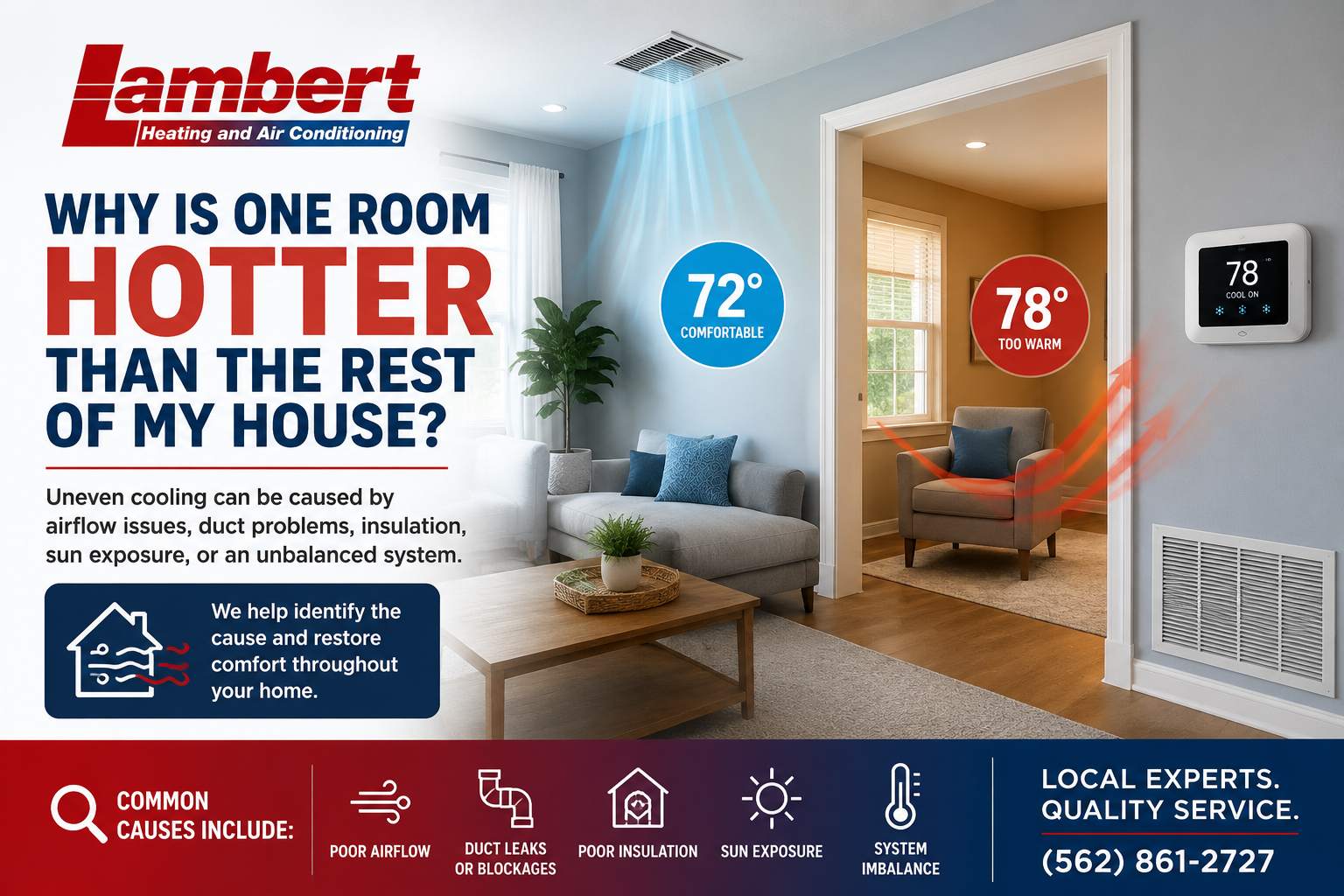
Quick Answer: Why Is One Room Hotter Than the Rest of My House?
A room may be hotter than the rest of your home because it is not receiving enough conditioned air, is gaining more heat than other areas, or has airflow restrictions that prevent proper cooling.
Common causes include:
- Poor airflow from vents
- Blocked or leaking ductwork
- Insufficient insulation
- Excessive sun exposure
- Dirty air filters
- Improperly sized HVAC systems
- Closed or obstructed vents
- Multi-story home temperature differences
In many cases, the issue can be corrected without replacing the entire HVAC system.
Why Uneven Cooling Is Common in Southern California
Homes throughout Los Angeles County and Orange County experience unique cooling challenges due to climate, home design, and extended cooling seasons.
Many Southern California homes have:
- Large west-facing windows
- Open floor plans
- Two-story layouts
- Bonus rooms over garages
- High ceilings
- Significant afternoon sun exposure
These factors can create areas that absorb and retain more heat than others, particularly during summer afternoons and heatwaves.
As outdoor temperatures rise, small airflow or insulation issues often become much more noticeable.
Poor Airflow Is One of the Most Common Causes
Your air conditioner can only cool a room if enough conditioned air reaches it.
When airflow is restricted, certain rooms may struggle to maintain the same temperature as the rest of the house.
Common airflow problems include:
Dirty Air Filters
A clogged air filter reduces the amount of air moving through your system.
This can affect airflow throughout the home and often becomes more noticeable in rooms that are already receiving less airflow.
Blocked Supply Vents
Furniture, curtains, rugs, and other household items can partially block vents and reduce airflow into a room.
Even a small obstruction can affect cooling performance.
Closed Registers
Homeowners sometimes close vents in unused rooms thinking it will improve efficiency. In reality, this can disrupt system balance and contribute to uneven temperatures.
Ductwork Problems Can Reduce Cooling
Your duct system is responsible for delivering conditioned air to every room in your home.
If ductwork becomes damaged, disconnected, crushed, or develops leaks, some rooms may receive significantly less cooled air than intended.
Signs of potential ductwork issues include:
- Weak airflow from specific vents
- Rooms that never reach the desired temperature
- Higher energy bills
- Excessive dust
- Uneven temperatures throughout the home
Duct leaks are especially common in attics, crawl spaces, and older homes.
Sun Exposure Can Make Certain Rooms Hotter
Not every cooling issue is caused by the HVAC system itself.
Rooms that receive direct sunlight for much of the day naturally absorb more heat.
This is particularly common in:
- West-facing bedrooms
- Home offices
- Living rooms with large windows
- Rooms with older windows
- Spaces lacking window coverings
During Southern California summers, afternoon sun can dramatically increase indoor temperatures in these areas.
Insulation May Be the Problem
Insulation helps slow the transfer of heat between your home and the outdoor environment.
If insulation is missing, compressed, or insufficient, certain rooms can heat up much faster than others.
This is particularly common in:
- Bonus rooms above garages
- Second-story bedrooms
- Converted attics
- Older homes
When insulation is inadequate, your air conditioner must work harder to maintain comfortable temperatures.
Why Upstairs Rooms Are Usually Hotter
Many homeowners ask why the upstairs is always warmer than the downstairs.
The answer is simple: heat rises.
As warm air naturally moves upward, second-story rooms often become hotter than lower levels. Combined with roof heat and direct sun exposure, upstairs spaces frequently require more cooling than the rest of the home.
This issue becomes especially noticeable during Los Angeles and Orange County heatwaves.
Could Your Air Conditioner Be the Wrong Size?
An improperly sized HVAC system can also contribute to uneven cooling.
A system that is too small may struggle to keep up with cooling demands during hot weather.
A system that is too large can create short cooling cycles, causing some rooms to cool unevenly.
Proper sizing takes into account:
- Square footage
- Insulation levels
- Window placement
- Sun exposure
- Ceiling height
- Home layout
This is why professional load calculations are important when installing a new system.
Signs You Should Have Your HVAC System Evaluated
If you consistently experience uneven temperatures, it may be time for a professional inspection.
Common warning signs include:
- One room is always hotter than the rest of the house
- Weak airflow from vents
- Rooms that never reach the thermostat setting
- Rising energy bills
- Constant thermostat adjustments
- Comfort issues that worsen during heatwaves
The longer these issues persist, the harder your system may have to work to compensate.
Frequently Asked Questions
Why is my upstairs hotter than my downstairs?
Heat naturally rises, causing second-story rooms to retain more warmth. Additional factors such as attic heat, insulation levels, and sun exposure can make the difference even more noticeable.
Can a dirty air filter cause one room to be hotter?
Yes. Restricted airflow can reduce cooling performance throughout the home and may make existing airflow imbalances worse.
Will closing vents in unused rooms help cool other rooms?
Usually not. Closing vents can disrupt airflow and pressure within the system, often creating additional comfort issues.
Can duct leaks cause uneven temperatures?
Absolutely. Leaking ductwork can prevent conditioned air from reaching certain rooms, leading to hot spots throughout the home.
Do I need a new AC if one room is always hot?
Not necessarily. Many uneven cooling issues can be resolved through maintenance, airflow adjustments, duct repairs, insulation improvements, or system balancing.
Improve Comfort Throughout Your Home
If one room in your home is consistently warmer than the rest, there is usually an underlying cause that can be identified and corrected.
Whether the issue involves airflow, ductwork, insulation, or system performance, addressing it early can improve comfort, reduce energy costs, and help your air conditioner operate more efficiently during Southern California’s hottest months.
Lambert Heating and Air Conditioning provides professional HVAC inspections, AC repair, maintenance, system evaluations, and airflow solutions throughout Los Angeles County and Orange County.
If you’re tired of dealing with hot rooms and uneven temperatures, call Lambert Heating and Air Conditioning at (562) 861-2727 to schedule an evaluation today.