How to Tell If Your Air Conditioner Is Nearing the End of Its Life
When summer temperatures start climbing across Los Angeles County and Orange County, homeowners depend on their air conditioning systems to keep their homes comfortable. Unfortunately, many air conditioners that seem to be working fine in the spring begin showing signs of trouble once they face the demands of a Southern California heatwave.
The challenge is that air conditioners rarely fail without warning. In most cases, there are signs that a system is struggling long before it completely breaks down.
If your AC has been needing more repairs, running longer than usual, or struggling to keep your home comfortable, it may be time to ask an important question:
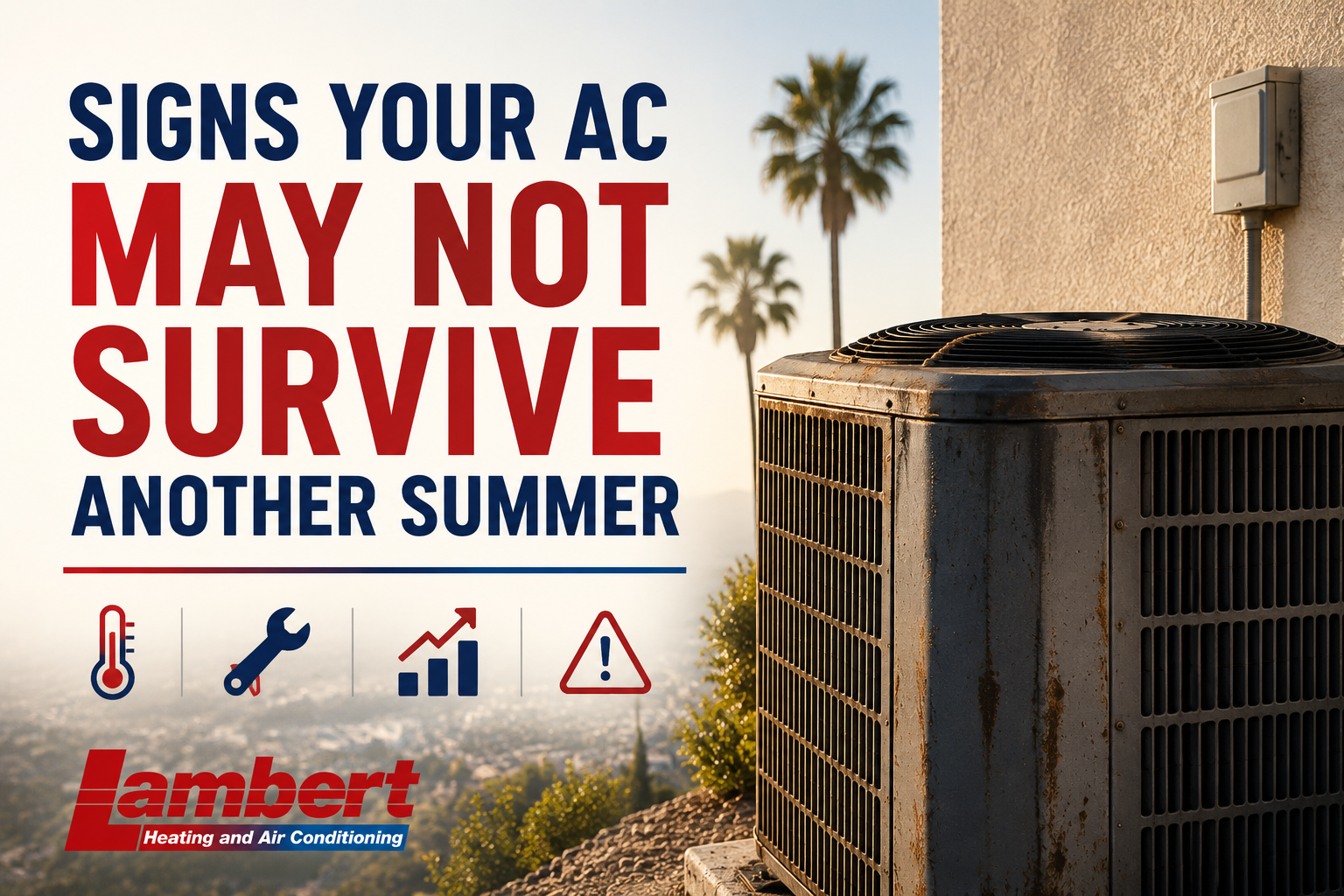
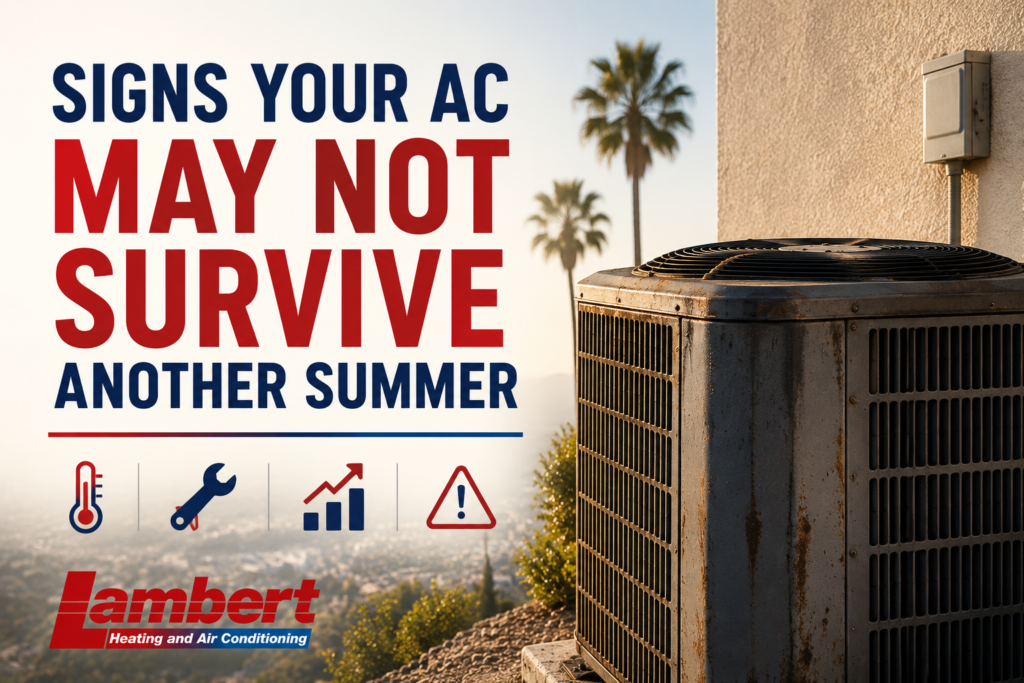
Will your air conditioner make it through another Southern California summer?
Understanding the warning signs can help you avoid an unexpected breakdown during the hottest months of the year and give you time to make informed decisions about repairs or replacement.
Quick Answer: How Do I Know If My AC Is Nearing the End of Its Life?
Some of the most common signs an air conditioner may be approaching replacement include:
- Frequent repairs
- Rising energy bills
- Longer run times
- Uneven cooling throughout the home
- Weak airflow
- Strange noises
- System age over 10-15 years
- Difficulty keeping up during hot weather
While any one of these issues may not mean replacement is necessary, multiple symptoms often indicate that a system is becoming less reliable and less efficient.
Your AC Struggles During Heatwaves
One of the clearest warning signs is when your system performs reasonably well during mild weather but struggles once temperatures climb into the 90s or higher.
You may notice:
- Your home never reaches the thermostat setting
- The AC runs continuously during the afternoon
- Indoor temperatures slowly rise despite the system running
- Certain rooms remain noticeably warmer than others
Southern California heatwaves place significant stress on cooling systems. If your equipment struggles every summer, it may be losing capacity as components age.
Energy Bills Continue to Increase
If your utility bills have steadily increased over the last few summers, your air conditioner may be working much harder than it should.
As systems age, they often lose efficiency due to:
- Worn components
- Reduced airflow
- Dirty coils
- Refrigerant issues
- General system wear
While maintenance can improve performance, older systems typically consume more electricity than newer, high-efficiency equipment. If your cooling costs seem higher each year despite similar thermostat settings, your AC may be nearing the end of its useful life.
You’re Calling for Repairs More Often
Occasional repairs are normal throughout the lifespan of any HVAC system. However, if service calls are becoming increasingly frequent, it may be time to evaluate whether continued repairs make financial sense.
Common signs include:
- Multiple repairs within a year
- Repeated refrigerant issues
- Electrical component failures
- Capacitor replacements
- Fan motor problems
- Compressor concerns
At some point, investing more money into an aging system may provide diminishing returns.
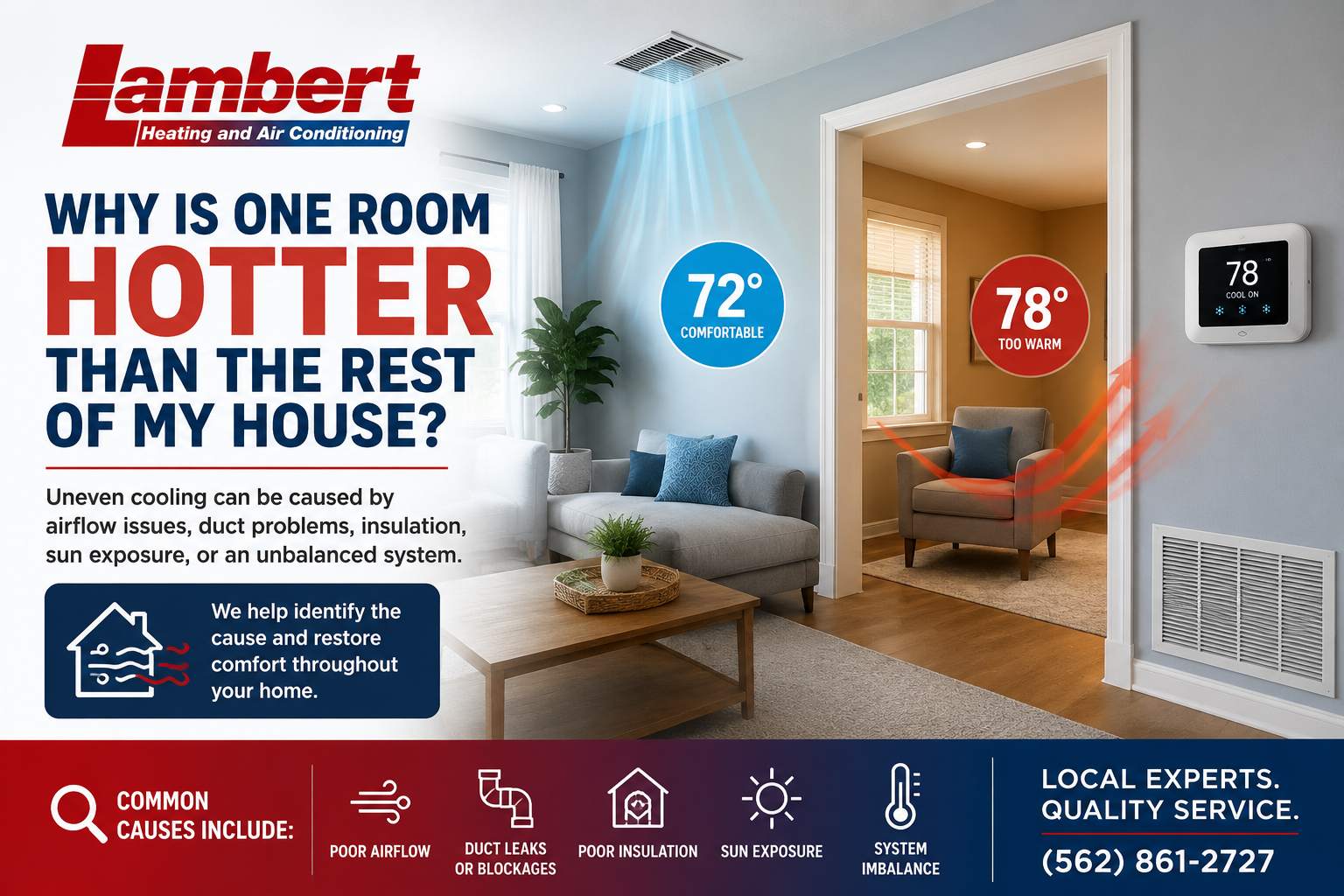
Your Home Has Uneven Temperatures
Many homeowners first notice aging HVAC equipment when comfort becomes inconsistent.
Common complaints include:
- One room is always hotter than another
- Upstairs temperatures are difficult to control
- Some areas cool quickly while others never seem comfortable
- Thermostat settings require constant adjustment
While airflow and ductwork issues can contribute to uneven cooling, aging equipment often struggles to distribute conditioned air effectively throughout the home.
Weak Airflow From Vents
Strong airflow is essential for effective cooling.
If airflow seems weaker than it used to be, your system may be dealing with:
- Blower motor wear
- Ductwork restrictions
- Dirty evaporator coils
- Aging components
Reduced airflow often causes longer run times, uneven temperatures, and higher operating costs.
Strange Noises Are Becoming More Common
Air conditioners should operate relatively quietly. If you are hearing new sounds, it may indicate developing mechanical issues.
Common warning noises include:
- Grinding
- Buzzing
- Rattling
- Squealing
- Clicking
- Vibration
These sounds don’t always mean replacement is required immediately, but they often indicate wear that should be evaluated before a major failure occurs.
Your AC Is More Than 10-15 Years Old
Age alone does not determine whether a system should be replaced. Many well-maintained systems continue operating beyond 15 years. However, once equipment reaches this age range, homeowners should begin paying closer attention to performance, efficiency, and repair frequency.
Factors that influence lifespan include:
- Maintenance history
- Installation quality
- Usage levels
- Local climate conditions
- Equipment quality
In Southern California, where cooling systems may operate for extended periods throughout the year, wear and tear can accumulate faster than many homeowners realize.
Repairs Are Starting to Cost More Than They’re Worth
One of the most common questions homeowners ask is whether they should repair or replace their air conditioner.
A professional evaluation can help determine the most cost-effective option, but warning signs often include:
- Expensive repair estimates
- Recurring breakdowns
- Poor efficiency
- Increasing utility costs
- Aging equipment
In some cases, replacing the system may provide lower long-term ownership costs than continuing to repair an aging unit.
Why Waiting Until a Breakdown Can Be Risky
Many homeowners plan to replace their AC “when it finally dies.”
The problem is that complete failures often happen during the hottest days of the year, when demand for HVAC service is at its highest.
This can result in:
- Emergency repair expenses
- Reduced appointment availability
- Longer installation wait times
- Several uncomfortable days without cooling
Planning ahead allows homeowners to evaluate options calmly instead of making decisions during an emergency.
Frequently Asked Questions
How long does an air conditioner last in Southern California?
Most residential air conditioning systems last between 10 and 15 years, although proper maintenance can extend their lifespan.
Should I replace my AC if it’s still working?
Not necessarily. However, if the system is inefficient, unreliable, or requiring frequent repairs, replacement may be worth considering before a major breakdown occurs.
How do I know if my AC is losing efficiency?
Common signs include rising energy bills, longer run times, reduced cooling performance, and difficulty maintaining temperature during hot weather.
Is it better to repair or replace an older AC?
The answer depends on the age of the system, the cost of repairs, and overall condition. A professional inspection can help determine the most cost-effective option.
What is the most expensive AC component to replace?
The compressor is often one of the most expensive repairs homeowners face and can significantly influence replacement decisions.
Don’t Wait for the Next Heatwave
If your air conditioner is showing signs of age, now is the best time to have it evaluated before peak summer temperatures arrive.
Identifying problems early can help you avoid costly emergency repairs, improve efficiency, and make informed decisions about your home’s comfort system.
Lambert Heating and Air Conditioning provides professional AC inspections, repairs, maintenance, and replacement services throughout Los Angeles County and Orange County. If you’re wondering whether your air conditioner is ready for another Southern California summer, call Lambert Heating and Air Conditioning at (562) 861-2727 to schedule an evaluation today.