
When most Southern California homeowners think about their HVAC system, air conditioning usually comes to mind first. With long, warm summers and relatively mild winters, cooling tends to get most of the attention. But when November brings cooler mornings and evenings, reliable heating becomes just as important.
If your furnace or air conditioner is getting older, you may be wondering whether replacing your traditional HVAC equipment with a heat pump makes sense. Heat pumps have become an increasingly popular option because they can provide both heating and cooling through one energy-efficient system.
For homeowners in Downey, Whittier, Norwalk, Lakewood, and surrounding Southern California communities, a heat pump can be a practical alternative to a conventional furnace and air conditioner. However, the right choice depends on your home’s layout, existing equipment, energy costs, and comfort needs.
At Lambert Heating & Air, we help homeowners understand their heating and cooling options so they can make informed decisions about repairing, upgrading, or replacing their HVAC systems.
Are Heat Pumps Worth It in Southern California?
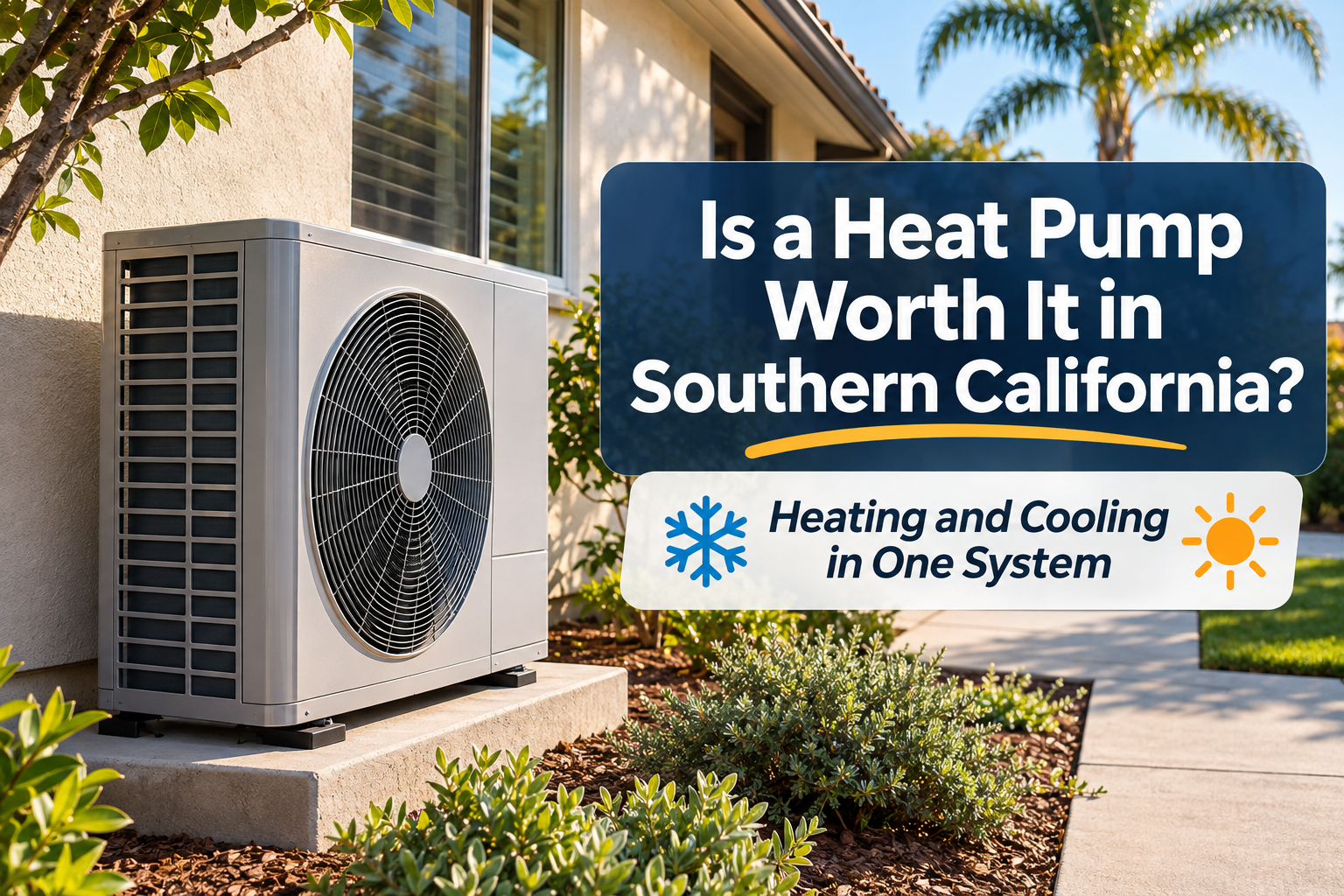
Yes, heat pumps can be worth installing in Southern California because the region’s relatively mild winters allow many modern heat pump systems to heat homes efficiently while also providing air conditioning during the summer. They are especially worth considering when replacing an aging HVAC system or upgrading from inefficient electric heating.
Unlike traditional systems that use separate equipment for heating and cooling, an air-source heat pump can perform both functions. During summer, it removes heat from inside your home, much like a conventional air conditioner. During winter, it reverses the process and transfers heat from the outdoor air into your living space.
Because heat pumps transfer heat rather than generate it through combustion or electric resistance, they can deliver efficient heating in moderate climates.
That doesn’t mean a heat pump is automatically the best financial choice for every household. Installation costs, electricity and natural gas rates, insulation, and the condition of your existing equipment all influence whether an upgrade makes sense.
How Does a Heat Pump Work in a Southern California Home?
A heat pump uses electricity and refrigerant to move heat between your home and the outdoors. Although the name might suggest that it only provides heating, a heat pump is designed to keep your home comfortable throughout the year.
During warmer months in Downey or Long Beach, the system operates in cooling mode, removing indoor heat and releasing it outside. When temperatures drop, the system switches to heating mode and extracts available heat from the outdoor air.
Even when the air outside feels chilly, there is still heat energy available for a properly designed heat pump to transfer indoors.
This makes heat pumps particularly well suited to areas where winters are generally moderate and extremely cold temperatures are uncommon.
Modern systems can also include variable-speed technology, allowing them to adjust their output to match the home’s heating or cooling needs instead of repeatedly operating at full capacity.
For homeowners, this can mean more consistent indoor temperatures, improved comfort, and potentially lower energy consumption compared with older, less efficient equipment.
Heat Pump vs. Furnace: What’s Better for Southern California?
One of the most common questions homeowners ask is whether a heat pump is better than a traditional gas furnace.
The answer depends on what matters most to you and how your current heating and cooling equipment is configured.
A gas furnace generates heat by burning natural gas, while an electric heat pump transfers heat from outside into your home. Both can provide reliable heating when properly installed and maintained.
In Southern California, where heating demand is generally lower than in colder parts of the country, a heat pump can be an attractive option because it handles both heating and air conditioning.
However, a modern, high-efficiency gas furnace may still be a reasonable choice for some households, particularly when the existing air conditioner is relatively new or local utility rates favor natural gas heating.
Homeowners should also consider the condition of their ductwork, available electrical capacity, and whether they want to move toward an all-electric heating and cooling system.
The best HVAC system isn’t necessarily the newest technology. It’s the one that fits your home, comfort expectations, and long-term budget.
Can a Heat Pump Really Keep Your Home Warm During Winter?
Yes. A properly sized and installed heat pump can provide effective heating during the mild winters experienced throughout much of Los Angeles and Orange County.
While Southern California is known for warm weather, temperatures can still drop considerably overnight, particularly during December, January, and February.
Modern heat pumps are designed to extract heat from outdoor air even when temperatures are cooler than the desired indoor temperature.
However, heat pump heating may feel different from the warmth produced by a gas furnace. Furnace supply air is often noticeably hotter, while a heat pump may deliver air at a lower temperature over longer operating cycles.
This doesn’t necessarily indicate poor performance. Heat pumps are often designed to maintain a consistent indoor temperature rather than deliver short bursts of very hot air.
Proper equipment sizing is especially important. A system that’s too small may struggle to maintain comfort, while an oversized system can experience inefficient cycling and uneven temperatures.
An experienced HVAC contractor can evaluate your home’s heating and cooling requirements before recommending equipment.
Will a Heat Pump Lower Your Energy Bills?
A heat pump may reduce energy consumption, particularly when replacing electric resistance heating or older, inefficient HVAC equipment. However, lower energy use doesn’t always translate directly into lower utility bills.
Your actual savings depend on several factors, including:
- The efficiency of your existing heating and cooling system.
- Local electricity and natural gas prices.
- How frequently you use heating and air conditioning.
- The size, insulation, and air sealing of your home.
- The efficiency and installation quality of the new heat pump.
- Your thermostat settings and household comfort preferences.
For example, replacing an older electric heating system with a modern heat pump may provide substantial efficiency improvements. Replacing a relatively efficient natural gas furnace, on the other hand, requires a closer comparison of operating costs.
Because Southern California electricity rates can be significant, it’s important to evaluate projected costs rather than assuming every heat pump will automatically lower monthly bills.
Lambert Heating & Air can help homeowners compare replacement options based on their existing system and household needs.
Is a Heat Pump a Good Replacement for an Older Air Conditioner?
If your air conditioner is nearing the end of its useful life, a heat pump is worth considering before investing in another cooling-only system.
Many homeowners already have a central air conditioner paired with a gas furnace. When one of those systems needs replacement, it’s an opportunity to review whether a different equipment configuration could provide better long-term value.
A central heat pump may be able to use existing ductwork if the ducts are appropriately sized, sealed, and in suitable condition. However, the indoor and outdoor equipment must be compatible, and some homes may need electrical or ductwork modifications.
In other situations, homeowners may benefit from a ductless mini-split heat pump, particularly when adding heating and cooling to a room without existing ductwork.
Before replacing your air conditioner or furnace, it’s worth discussing both conventional HVAC and heat pump options rather than automatically choosing the same type of equipment you already have.
How Much Does Heat Pump Installation Cost in Downey, CA?
The cost of heat pump installation varies depending on the size of your home, the type of equipment selected, and the work required to complete the installation.
A straightforward replacement in a home with suitable existing ductwork may cost less than a project that requires extensive duct modifications, electrical upgrades, or multiple indoor units.
Other factors that influence installation pricing include system efficiency, capacity, equipment configuration, and accessibility.
Rather than relying on a generic online price range, homeowners should request an estimate that accounts for their actual property and comfort needs.
It’s also important to compare the total value of the system, including expected operating costs, equipment warranty, maintenance requirements, and installation quality.
A lower initial price isn’t always the best long-term investment if the equipment is poorly matched to the home.
Financing Options for a New Heat Pump
Replacing your heating and cooling equipment is a significant investment, and the timing isn’t always convenient.
Lambert Heating & Air offers financing options through Optimus to help eligible homeowners spread the cost of qualifying HVAC installations over time.
Financing options advertised by Lambert include a 15-month, 0% interest option, subject to current program terms and credit approval.
If you’re considering a heat pump upgrade, ask our team about available financing options when requesting your installation estimate.
Are Heat Pumps Better for the Environment?
Heat pumps can offer environmental advantages because they operate using electricity and transfer heat instead of burning fuel directly inside the home.
For homeowners interested in reducing on-site fossil fuel use, replacing a gas heating system with an electric heat pump may be an appealing option.
The overall environmental impact still depends on how electricity is generated, equipment efficiency, refrigerant management, and how frequently the system operates.
Choosing an appropriately sized, high-efficiency system and maintaining it properly can help support efficient performance over its service life.
When Should You Consider Replacing Your HVAC System With a Heat Pump?
You don’t necessarily need to wait until your furnace or air conditioner stops working to explore heat pump installation.
If your current system requires frequent repairs, struggles to maintain comfortable temperatures, or has become increasingly expensive to operate, it may be time to compare replacement options.
Other reasons to consider a heat pump include planning a home renovation, replacing both heating and cooling equipment, adding comfort to a room without ductwork, or wanting to explore an all-electric HVAC system.
November can be a convenient time to begin researching your options, especially before another Southern California summer places heavy demand on your air conditioning equipment.
A professional evaluation can help determine whether repairing your current system or investing in a heat pump would be the better decision.
Is a Heat Pump the Right Choice for Your Home? Let Lambert Help You Decide.
Southern California homeowners have more heating and cooling options than ever before, and heat pumps are worth considering when it’s time to replace aging HVAC equipment.
With the ability to provide both heating and cooling, modern heat pump systems can offer year-round comfort and efficient performance in our region’s climate.
But every home is different. The right decision depends on your current system, utility costs, comfort concerns, and installation requirements.
At Lambert Heating & Air, our team can help you compare your options and determine whether a heat pump, traditional HVAC replacement, or another solution makes the most sense for your home.
Thinking about upgrading your heating and cooling system?
Call (562) 861-2727 to request an estimate.
Ask about available financing options and find out whether a heat pump is the right investment for your home.