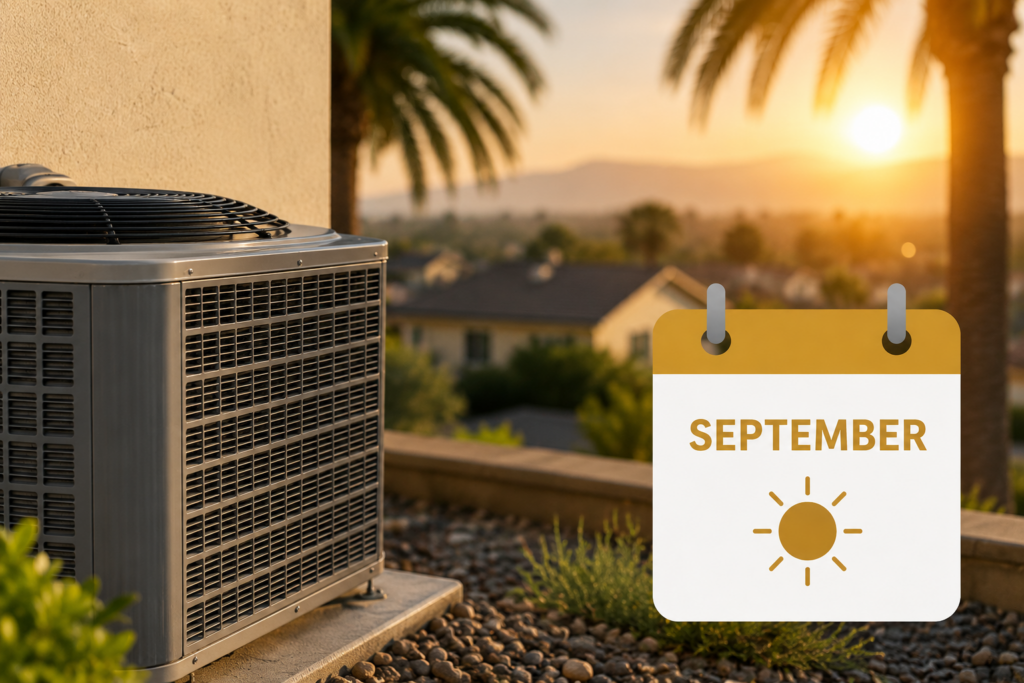
A Southern California Homeowner’s Guide
September may technically signal the beginning of fall, but in Southern California, your air
conditioner may not have gotten the message.
Homeowners throughout Los Angeles County and Orange County often continue using their AC
well into September and even October. Warm afternoons, extended heat waves, direct sun
exposure, and heat that builds up inside the home can keep cooling systems working long after
summer begins winding down.
But how much AC use is normal for September, and when does a system that seems to be
running constantly indicate a problem?
Understanding the difference can help you avoid unnecessarily high energy bills, identify
potential HVAC issues early, and keep your home comfortable through Southern California’s
extended cooling season.
Quick Answer: Why Is My AC Running So Much in September?
Your air conditioner may still run frequently in September because outdoor temperatures remain
warm and your home continues absorbing heat throughout the day.
However, excessive AC operation can also be caused by:
● Dirty air filters
● Restricted airflow
● Dirty evaporator or condenser coils
● Leaking or damaged ductwork
● Thermostat issues
● Low refrigerant
● Poor insulation
● An aging or inefficient AC system
● An air conditioner that is improperly sized for the home
If your AC is running for long periods but your home remains comfortable, the system may
simply be responding to September heat. If it runs constantly and struggles to reach the
thermostat setting, there may be an underlying issue.
September Is Still Cooling Season in Southern California
Unlike many parts of the country, Southern California doesn’t always experience a dramatic
temperature change once September arrives.
Los Angeles County and Orange County can continue experiencing hot afternoons and periods
of significant heat well into early fall. Homes also continue absorbing heat from direct sunlight
throughout the day. That means your air conditioner may still have plenty of work to do.
This is especially noticeable in homes with:
● West-facing windows
● Large windows or sliding glass doors
● Second stories
● High ceilings
● Limited insulation
● Significant afternoon sun exposure
Your AC running in September isn’t necessarily unusual. What matters is how long it runs and
whether it is successfully keeping your home comfortable.
Your Home May Still Be Holding Onto Summer Heat
Outdoor temperature isn’t the only thing determining how often your AC runs.
Your roof, attic, walls, windows, and other building materials absorb heat throughout the day.
Even as temperatures begin dropping outside in the evening, that stored heat can continue
transferring into your living space. This can cause your AC to continue cycling later into the
afternoon and evening. Second-story rooms and areas receiving direct afternoon sunlight may
be especially noticeable.
A Dirty Air Filter Can Make Your AC Work Harder
After months of summer operation, your air filter may be dirtier than you realize. As dust and
debris collect on the filter, airflow through your HVAC system becomes restricted. Your air
conditioner then has to operate longer to move enough conditioned air throughout your home.
Signs of restricted airflow may include:
● Longer cooling cycles
● Weak airflow from vents
● Certain rooms staying warmer
● Increased energy consumption
● Difficulty reaching the thermostat setting
Checking your filter is one of the simplest things you can do when your AC suddenly seems to
be running more frequently.
Your Outdoor AC Unit Has Been Working All Summer
By September, your air conditioning system has already been through months of Southern
California summer conditions.
Dust, leaves, landscaping debris, and other material can accumulate around the outdoor
condenser. Dirty condenser coils can also make it more difficult for the system to release heat
outdoors. When heat transfer becomes less efficient, the AC may compensate by running
longer.
Keeping the area around the outdoor unit clear and having the equipment professionally
maintained can help the system operate more effectively.
Your Ductwork Could Be Losing Cooled Air
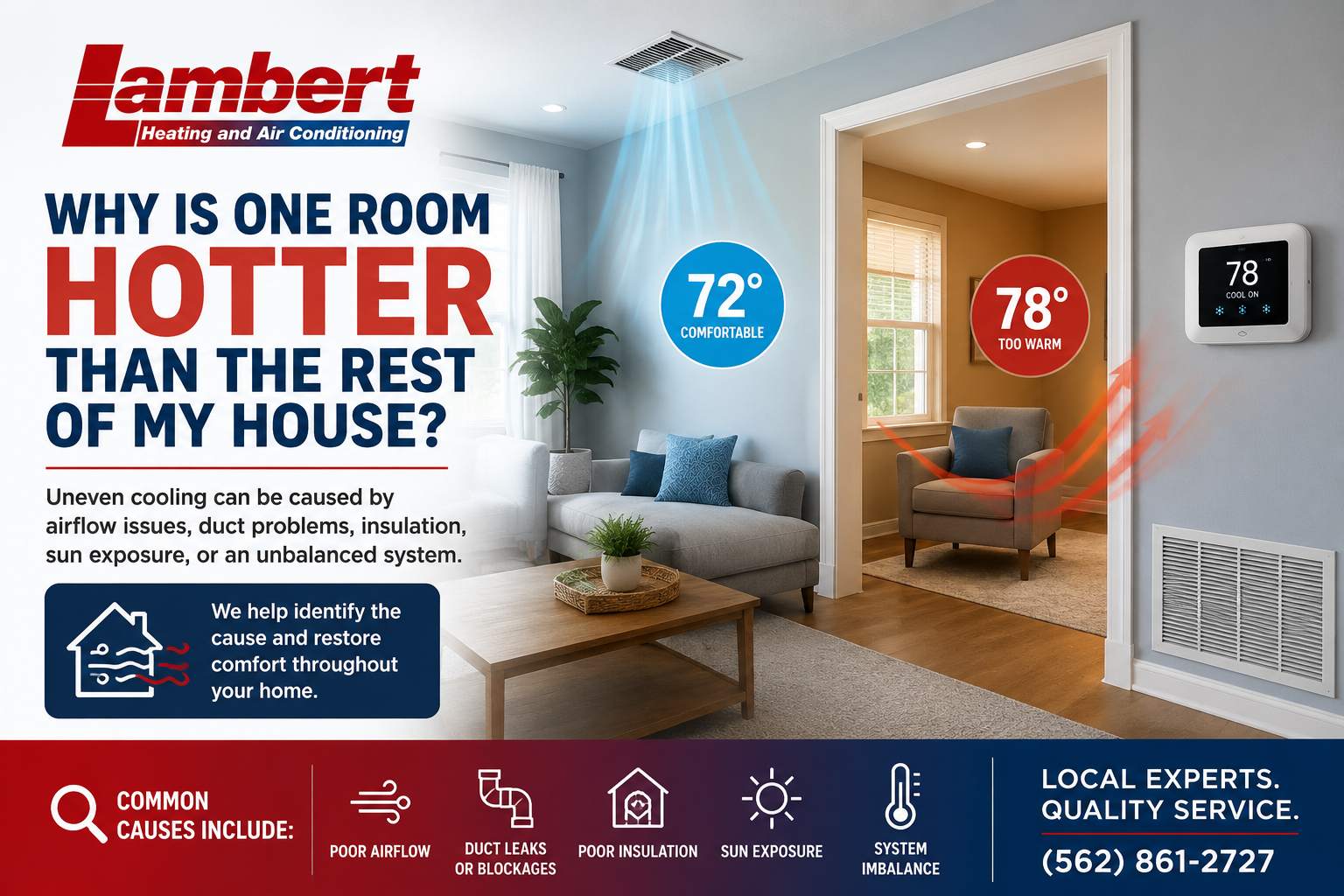
Your air conditioner can be operating properly while your home still struggles to cool if
conditioned air isn’t reaching the rooms where it’s needed. Damaged, disconnected, or leaking
ductwork can allow cooled air to escape before it reaches your living spaces.
Potential signs of ductwork problems include:
● Weak airflow from certain vents
● Uneven temperatures between rooms
● Hot or uncomfortable rooms
● Longer AC run times
● Increasing utility bills
Ductwork located in hot attic spaces can make these problems especially noticeable during
extended Southern California heat.
Your Thermostat Setting Makes a Difference
There can be a significant difference between maintaining a moderately comfortable indoor
temperature and asking your AC to maintain a very low temperature during a hot September
afternoon.
The larger the difference between the outdoor temperature and your thermostat setting, the
harder your system generally has to work. If your AC seems to be running constantly, consider
whether you’ve recently lowered the thermostat or changed its schedule.
Also make sure your thermostat is set to Cool and the fan is set appropriately rather than
continuously running in the On position.
Low Refrigerant Can Cause Longer Cooling Cycles
Your air conditioner relies on refrigerant to absorb heat from inside your home and transfer it
outdoors. If refrigerant is low because of a leak, your system may continue operating but have
difficulty producing enough cooling.
Possible signs include:
● AC running constantly
● Reduced cooling performance
● Warm or less-cool air from vents
● Ice on refrigerant lines
● Difficulty reaching the thermostat setting
Refrigerant is part of a closed system, so low refrigerant isn’t something that should simply need
to be routinely “topped off.” A professional HVAC technician should determine whether a leak or
another problem is present.
Your AC May Be Showing Signs of Age
An air conditioner doesn’t have to completely stop working to be experiencing performance
problems. As equipment ages, components can wear and efficiency can decline. The system
may gradually require longer operating cycles to provide the same amount of cooling it once
delivered more easily.
You might notice:
● The AC runs longer than it did in previous years
● Energy bills continue increasing
● Cooling isn’t as consistent
● Certain rooms are becoming harder to cool
● Repairs are becoming more frequent
● The system struggles during the hottest part of the day
These symptoms don’t automatically mean you need a new air conditioner. They do indicate
that having the system evaluated may be worthwhile.
Is It Normal for an AC to Run All Day During Hot Weather?
Long cooling cycles during particularly hot afternoons aren’t necessarily a sign of failure.
The more important question is:
Is your AC keeping your home at or near the temperature you’ve selected?
If your system runs for extended periods but maintains a comfortable indoor temperature, it may
simply be keeping up with a heavy cooling load. If the system runs continuously while the indoor
temperature keeps climbing, that’s different.
For example, if your thermostat is set to 76°F but the temperature inside continues rising to
80°F or higher while the AC runs, the system may not be keeping up properly.
Could September Be a Good Time for AC Maintenance?
Yes. In fact, September can be a useful time to evaluate how your air conditioner performed
during the summer.
After months of heavy operation, an HVAC inspection can identify issues such as:
● Dirty components
● Airflow restrictions
● Electrical wear
● Refrigerant concerns
● Drainage problems
● Ductwork issues
● Declining system performance
Finding smaller problems now may also help prevent them from becoming larger repair issues.
And in Southern California, where warm weather can continue well beyond Labor Day, there’s
still plenty of cooling season left.
Frequently Asked Questions
Is it normal to still use air conditioning in September in Southern
California?
Yes. Warm weather commonly continues into early fall throughout Los Angeles County and
Orange County, so many homeowners continue using their air conditioning systems throughout
September.
Why does my AC run constantly but never reach the thermostat
temperature?
Possible causes include restricted airflow, dirty coils, refrigerant issues, ductwork problems,
excessive heat entering the home, or declining AC performance. If the temperature continues
rising while the system runs, professional diagnosis is recommended.
Can a dirty air filter make my AC run longer?
Yes. A clogged filter restricts airflow, which can reduce cooling performance and force the
system to operate for longer periods.
Should I turn my AC off when I’m not home?
Rather than shutting the system off completely during hot weather, many homeowners use a
programmable or smart thermostat to adjust the temperature while the home is unoccupied and
return it to a comfortable setting before they arrive.
Why does my AC work fine at night but struggle during the afternoon?
Higher outdoor temperatures, direct sunlight, attic heat, and increased cooling demand can
make afternoon conditions significantly more challenging for an air conditioner. A system with
airflow, maintenance, or performance issues may struggle most during these peak conditions.
Does an AC running constantly mean it needs to be replaced?
Not necessarily. Long run times can be caused by weather conditions, thermostat settings, dirty
filters, airflow restrictions, maintenance issues, or repairable component problems. System age,
repair history, efficiency, and overall performance should all be considered before deciding
whether replacement makes sense.
Don’t Assume Summer Is Over Yet
September may be the beginning of fall on the calendar, but Southern California homeowners
can still have plenty of hot weather ahead.
If your AC is running more than you think it should, pay attention to how well it’s actually cooling
your home. Longer run times during a hot afternoon can be normal. Constant operation
combined with rising indoor temperatures, weak airflow, unusual noises, or increasing energy
bills deserves a closer look.
After working hard all summer, September can also be an ideal time to make sure your system
is still operating efficiently and address problems before they become more expensive.
Lambert Heating and Air Conditioning provides professional AC repair, maintenance,
inspections, and HVAC services throughout Los Angeles County and Orange County. If your air
conditioner is running constantly or struggling to keep your home comfortable, call Lambert
Heating and Air Conditioning at (562) 861-2727 to schedule service.