If your air conditioner is not cooling the way it used to, one of the most common culprits is low refrigerant — and if your refrigerant is low, it means you have a leak. This is one of the most misunderstood facts in residential HVAC: refrigerant does not get used up like gasoline. A properly functioning AC system circulates the same refrigerant indefinitely. When the level drops, something has gone wrong, and simply adding more refrigerant without finding and fixing the source is a temporary fix that will fail again.
This guide covers exactly what refrigerant does, how to recognize the signs of a leak in your Downey home’s AC system, why DIY refrigerant handling is both illegal and dangerous, and what proper refrigerant leak repair looks like from a licensed technician.
What Refrigerant Actually Does — and Why Low Levels Hurt
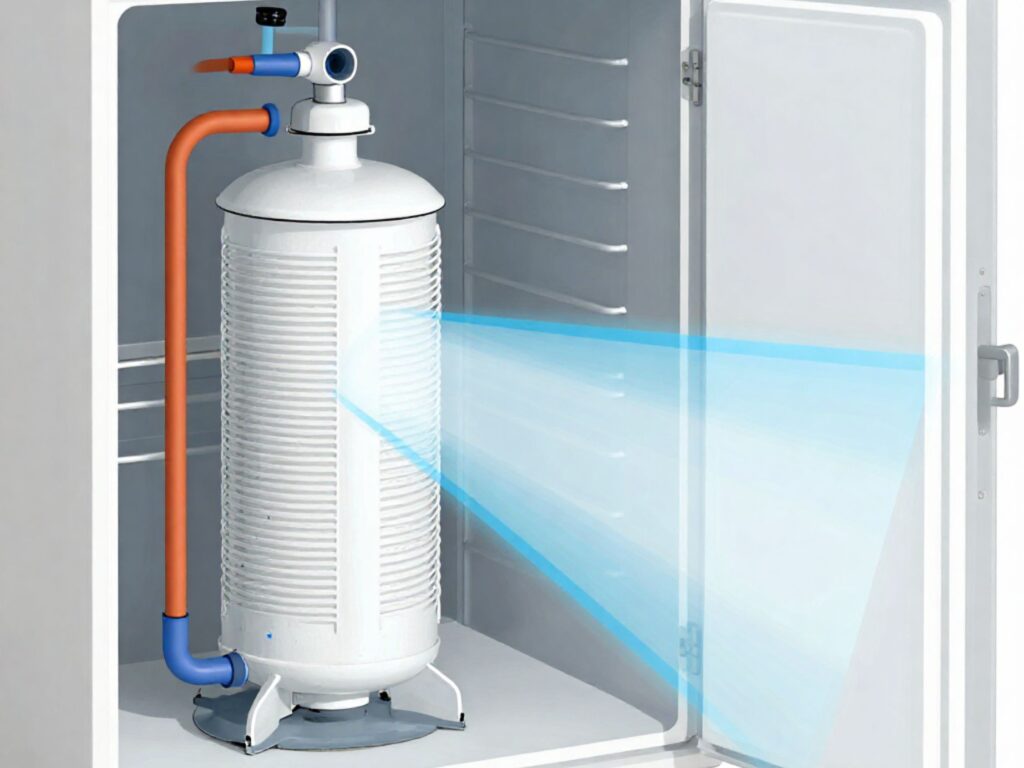
Refrigerant is the working fluid that makes air conditioning possible. It circulates between the indoor evaporator coil and the outdoor condenser coil, absorbing heat from indoor air at the evaporator and releasing it outside at the condenser. The refrigerant changes state — from liquid to gas and back — as it moves through this cycle, and those state changes are what drive heat transfer.
When refrigerant levels drop due to a leak, the system’s ability to absorb indoor heat decreases proportionally. The AC runs longer and works harder to produce less cooling. Ultimately, if the leak is severe enough, the system cannot cool at all — regardless of how long it runs or how low the thermostat is set. In Southern California’s heat, that is not a tolerable outcome.
The damage from low refrigerant extends beyond poor cooling. Running a compressor consistently low on refrigerant causes the compressor to overheat and work under excessive load — accelerating wear and shortening its lifespan significantly. Compressor replacement is one of the most expensive repairs in residential HVAC. Catching a refrigerant leak early protects both the immediate cooling problem and the long-term health of the most critical component in the system.
7 Signs Your Downey AC May Have a Refrigerant Leak
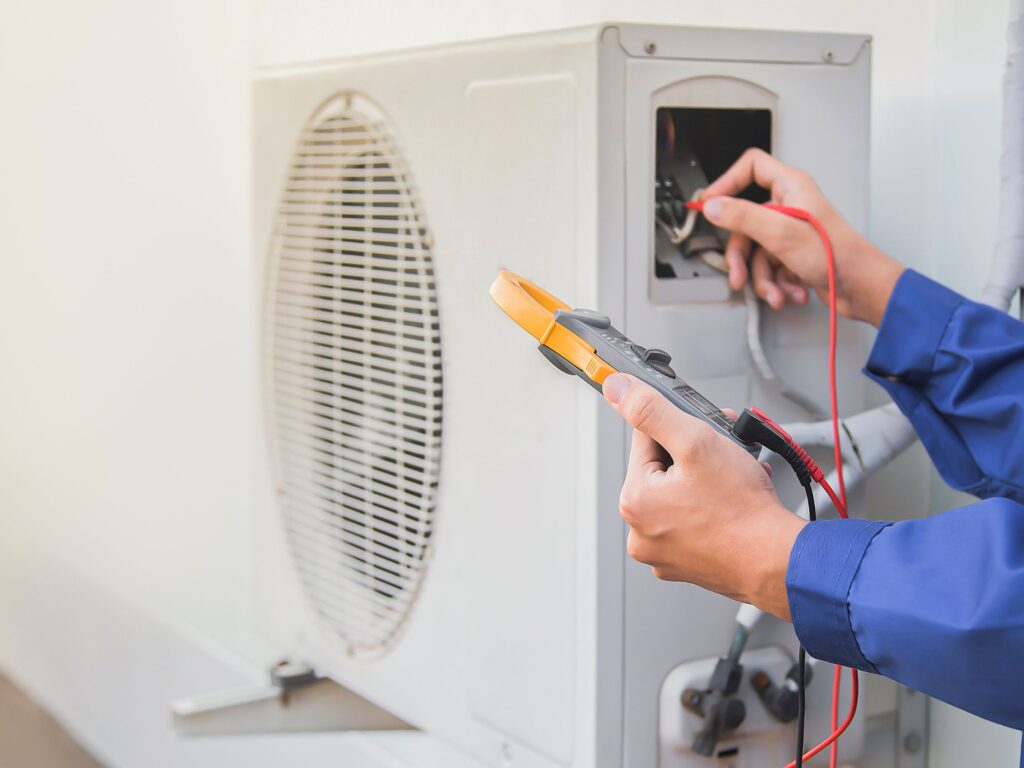
Refrigerant leaks develop gradually in most cases, which means the symptoms appear slowly and can be easy to rationalize or dismiss individually. Here are the signs to take seriously — especially if you are seeing more than one at the same time:
1. Warm or Insufficiently Cool Air From the Vents
This is the most obvious symptom and the one homeowners notice first. If your AC is running but the air coming out of the registers feels noticeably warmer than it used to, or if the home struggles to reach the thermostat setpoint even on a mild day, low refrigerant is a primary suspect. The system is running, but it lacks the thermal capacity to cool effectively.
2. Ice or Frost on the Evaporator Coil or Refrigerant Lines
Counterintuitively, low refrigerant causes the evaporator coil to freeze. When refrigerant pressure drops below the correct operating range, the coil surface temperature falls below the freezing point of moisture in the air passing over it. Ice builds up on the coil and eventually blocks airflow entirely — causing the system to produce little or no cooling even while running continuously. If you can see frost or ice on the copper lines running from the outdoor unit to your home, this is a clear warning sign.
A frozen coil needs to be addressed promptly — continuing to run a system with ice on the coil can damage the compressor. Our frozen AC coil repair and refrigerant leak diagnosis in Downey identifies whether ice buildup is from a refrigerant issue or an airflow problem, and resolves the root cause rather than just defrosting the coil.
3. Hissing or Bubbling Sounds Near the Indoor Unit or Refrigerant Lines
Refrigerant escaping through a small crack or hole in the line produces a hissing sound — similar to air escaping a tire. A bubbling or gurgling sound can indicate a larger leak or a low-side pressure issue. These sounds are not always loud or easy to locate, but if you hear something unusual near the air handler or along the refrigerant lines, it warrants a professional inspection.
4. Longer Run Times and Higher Energy Bills
A system low on refrigerant cannot remove heat from indoor air efficiently, so it compensates by running longer cycles. Longer cycles mean more electricity consumed — and in Southern California, where utility rates are already among the highest in the country, that inefficiency shows up on your bill quickly. If your energy costs have climbed without a change in your usage habits or outdoor temperatures, reduced system efficiency is a likely cause.
5. Humidity Feels Higher Indoors
One of the secondary functions of air conditioning is dehumidification — the evaporator coil extracts moisture from indoor air as it cools it. When refrigerant is low and the coil cannot reach its correct operating temperature, moisture removal is impaired. If your home feels stickier or more humid than usual even with the AC running, reduced refrigerant charge is a potential explanation.
6. The AC Runs Constantly Without Reaching the Setpoint
A system in good condition cycles on and off as it reaches and maintains the thermostat setpoint. A system low on refrigerant may run nearly continuously — particularly during a Southern California heat wave — without ever cooling the home to the target temperature. This is a compressor under stress, and every hour it runs in this condition accelerates component wear.
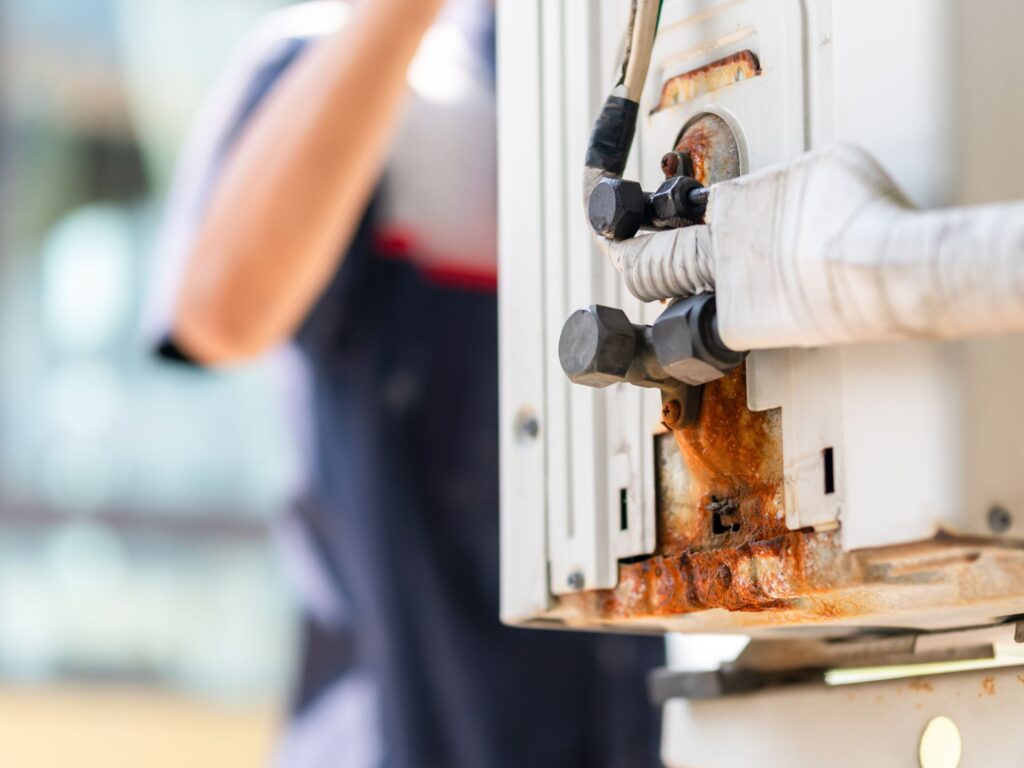
7. You Can See Oily or Greasy Residue Near Refrigerant Line Connections
Refrigerant itself is colourless and odourless, but refrigerant oil — which lubricates compressor components and circulates with the refrigerant — leaves a distinctive oily residue at leak points. If you inspect the refrigerant line connections at the indoor air handler or the outdoor condenser and see greasy or oily residue, that is often a reliable indicator of a leak at that connection.
Why You Cannot Simply “Top Off” the Refrigerant
One of the most persistent misconceptions about AC refrigerant is that it can be topped off like motor oil — that the solution to low refrigerant is to add more. This is wrong in two important ways.
First, adding refrigerant without finding and repairing the leak means the refrigerant will continue to escape. You may get a few weeks or a season of improved performance before the level drops again and the symptoms return. The underlying leak remains, and eventually the system will be back in the same condition — often with additional wear from the intervening period of running low.
Second, and critically: handling refrigerant requires EPA Section 608 certification. Federal law prohibits anyone without that certification from purchasing or handling refrigerant. It is illegal for unlicensed individuals to attempt to recharge a system, and releasing refrigerant to the atmosphere is a federal environmental violation. This is not a DIY repair under any circumstances.
Proper refrigerant leak repair involves locating the leak using electronic leak detection equipment or UV dye, repairing or replacing the damaged component, pressure testing the system to confirm the leak is sealed, pulling a vacuum on the refrigerant circuit to remove moisture and air, and then recharging to the manufacturer’s specified charge — measured precisely, not estimated.
Where Refrigerant Leaks Most Commonly Occur in Downey AC Systems
Not all refrigerant leaks happen in the same place. Understanding the most common failure points helps you provide useful information to your technician and understand the repair options they present:
Schrader valve cores on the service ports are among the first places a technician checks — inexpensive to replace and a common slow-leak source on older systems. Evaporator coils in Southern California homes are susceptible to formicary corrosion — pitting caused by formic acid formed from moisture, copper, and indoor VOCs — which produces progressive leaks that tend to multiply once they start. Refrigerant line connections and flare fittings can loosen from years of vibration. And condenser coils are vulnerable to physical damage from yard debris and, in homes closer to the coast, to corrosion from salt-laden Pacific air.
R-22 vs R-410A — What Your System Uses Matters for Repair
The type of refrigerant your system uses affects both the repair cost and the long-term decision about whether to repair or replace.
R-22 (Freon):
R-22 was the standard residential refrigerant for decades and is found in systems manufactured before approximately 2010. It was phased out under EPA regulations due to its ozone-depleting properties — production and import of R-22 ended in the United States on January 1, 2020. R-22 is now available only from recovered and reclaimed stocks, making it significantly more expensive than current refrigerants. If your system uses R-22 and has a meaningful leak, the cost of recharging with R-22 often makes a compelling case for replacement rather than repair.
R-410A:
R-410A is the current standard refrigerant for residential systems installed from approximately 2010 onward. It is readily available, does not deplete the ozone layer, and is significantly less expensive per pound than R-22. If your system uses R-410A, a refrigerant leak is a straightforward repair — find the leak, fix it, recharge to specification.
If you are unsure which refrigerant your system uses, our AC repair and system assessment team in Downey can identify your refrigerant type and give you an honest recommendation on whether repair or replacement makes more financial sense for your specific system and budget.
When a Refrigerant Leak Means It Is Time to Replace the System
Refrigerant leak repair is the right answer for most systems. But there are situations where replacement makes more financial sense than repair:
- R-22 system with a significant leak: If recharging requires several pounds of R-22 at current market prices, that cost alone may approach or exceed a meaningful portion of a new system’s cost — without addressing the underlying age and efficiency issues
- Evaporator coil replacement: If formicary corrosion has degraded the evaporator coil to the point where it needs replacement, the cost of a new coil — particularly for an older system — often approaches the cost of full system replacement. A new system comes with a warranty; a new coil in an aging system does not solve the system’s other aging components
- System age over 12 to 15 years: An older system with a leak has likely developed other wear simultaneously. Repairing the leak in a system approaching end of life means you may face another significant repair within a season or two
If replacement is the right path, Lambert Heating and Air Conditioning provides new AC installation in Downey when refrigerant leak repair no longer makes financial sense — helping you select a properly sized, efficient system and completing the installation to manufacturer specifications so your new equipment performs reliably from day one.
The Right Way to Handle Refrigerant Leak Repair in Southern California
Here is what a proper refrigerant leak repair looks like when a licensed technician handles it:
- Leak detection: Electronic leak detectors or UV dye injection identifies the precise location of the leak — not an estimate based on symptoms
- Component repair or replacement: Depending on the location, the technician tightens a fitting, replaces a Schrader valve core, repairs a line connection, or recommends coil replacement if the coil is the source
- Pressure test: After repair, the system is pressurised with nitrogen to confirm the leak is sealed before refrigerant is introduced
- Vacuum: A vacuum pump removes moisture and non-condensables from the refrigerant circuit — essential for correct system operation and compressor longevity
- Recharge to specification: Refrigerant is added to the precise manufacturer-specified charge, measured by weight or superheat/subcooling readings — not by pressure gauge estimation
- System performance verification: The technician confirms proper operation through a full operating cycle before leaving
Schedule Refrigerant Leak Repair in Downey Today
Refrigerant leaks do not resolve on their own — they grow. The sooner the leak is found and repaired, the less refrigerant has been lost, the less stress the compressor has endured, and the lower the total repair cost. Schedule refrigerant leak repair in Downey with Lambert Heating and Air Conditioning and our licensed technicians will locate the leak, repair it properly, and recharge your system to the correct specification.
Call us at 562-861-2727 or request a quote online. Lambert Heating and Air has served Downey and Southern California since the early 1970s — we will diagnose it honestly and fix it right.
If the repair or replacement cost is a concern, ask about our 0% financing options for AC repairs and replacement at Lambert Heating and Air — so that cost does not become a reason to delay a repair your system and your family’s comfort depend on.
Call 562-861-2727 — Refrigerant Leak Repair in Downey, CA | Lambert Heating and Air Conditioning